
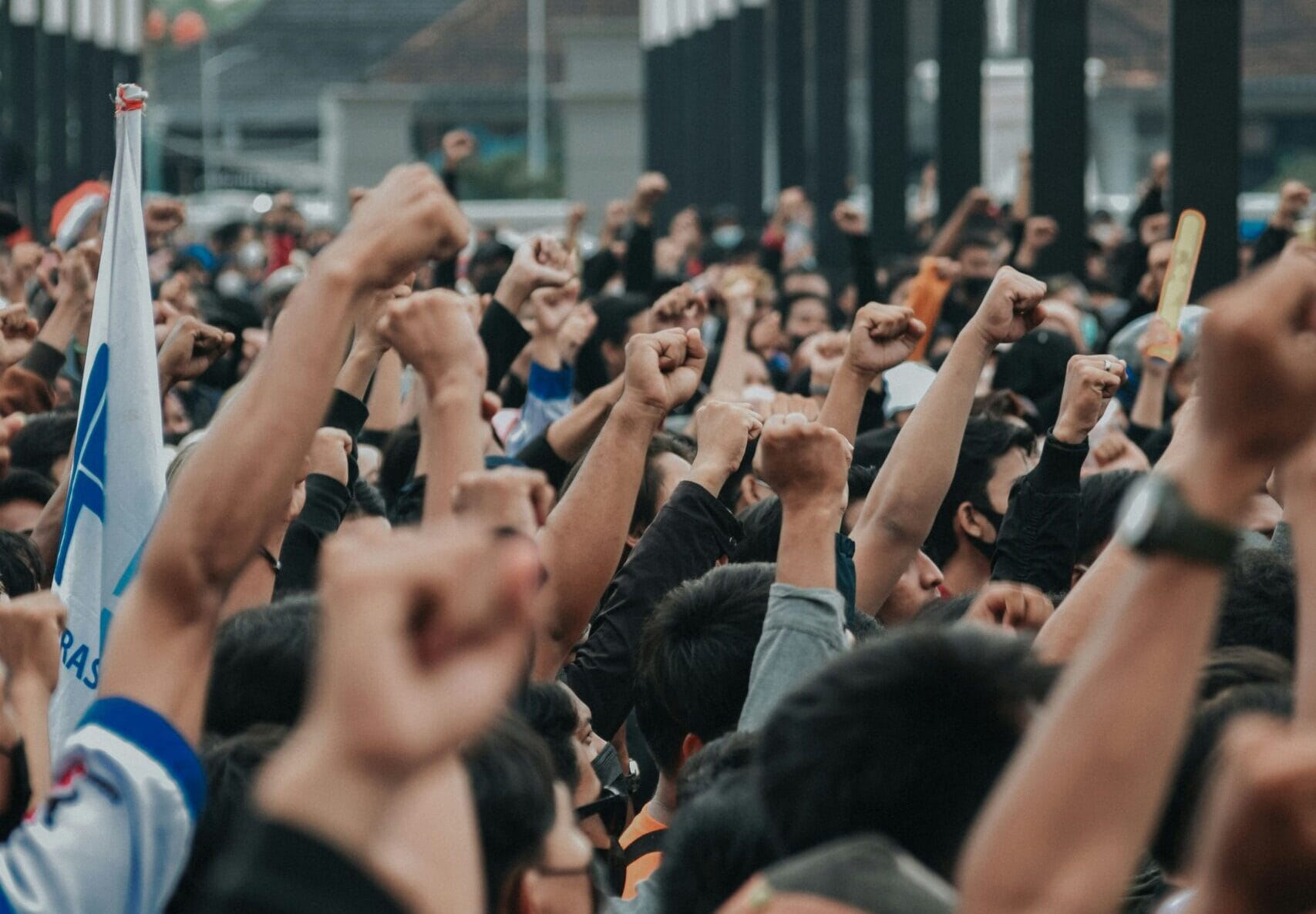
Hey guys! As always, it has been a while 😅. I have found myself back in KL again (doing a little 2-week cardiology observership!). This city seems to always find a way to motivate me to write something on here 😆, so here goes nothing.. Hope you enjoy this very vague piece on Indonesian politics!
Indonesians have something to be very proud about
There is something strangely modest about the way we sometimes talk about Indonesia.
We often compare our institutions to Singapore, our economy to America, our education system to Europe, and our cities to whoever seems to be doing better. There is nothing wrong with comparison, but sometimes I wonder whether we have forgotten that Indonesia once imagined itself not as a country trying to catch up with the world, but as a country trying to change it.
If you don’t know yet, in 1955, Indonesia and then President Sukarno hosted the Asian-African Conference in Bandung. 29 Asian and African countries gathered in a newly independent Indonesia, many of them only recently emancipated from colonial rule. The conference represented something larger than diplomacy: an assertion that countries emerging from colonialism had their own interests, their own political traditions, and their own right to shape the international order.
His opening speech called for a “New Asia” and a “New Africa”. The language was ambitious because the circumstances demanded ambition. These countries were not to remain objects of history, shaped by decisions made in Washington, London, Moscow, or elsewhere.
A few years later, Soekarno developed this thinking further through his distinction between the New Emerging Forces and the Old Established Forces.
The terminology was unmistakably confrontational. The world, in his conception, was not simply divided according to the Cold War’s familiar American-Soviet binary. There was another political reality: the peoples and nations emerging from colonialism, and the older structures of power that had dominated the international system.
“To Build the World Anew”
Perhaps the clearest expression of this confidence in the New Emerging Forces came in Soekarno’s 1960 address to the United Nations, titled “To Build the World Anew.”
He was not there merely to ask the established powers to accommodate Indonesia. He was arguing that the international system itself needed to be reconsidered.
Soekarno challenged the idea that the Cold War’s existing power structures represented the natural order of the world. He spoke about colonialism, imperialism, disarmament, economic inequality, and the need for the United Nations to become an institution capable of creating a genuinely more just international order. The speech was explicitly framed as a demand to build something new rather than simply preserve what already existed.
There is something incredibly inspiring about the confidence of that language when compared with the political imagination we sometimes see today. A newly independent country, only fifteen years removed from colonial rule, was standing before the international community and essentially saying: the world you have built is not the only possible world.
That is a remarkable thing for a country to believe about itself. And perhaps young Indonesians should be willing to believe something similar.
Not that Indonesia is superior to the West or that everything Western is inherently bad.
But rather, we should reject the assumption that political and economic progress has only one geographical direction, and at the moment, it definitely does not lie with the West.
The confidence of Bandung was not simply anti-Westernism. At its best, it was intellectual independence.
From Bandung to Today
This all makes the current Indonesian political landscape rather interesting.
We live in a country that has inherited an extraordinary democratic tradition, a large and increasingly educated population, a huge economy, and a history of having once played a role in the politics of the Global South.
Yet our political conversation can sometimes feel remarkably small.
We argue endlessly over personalities. We follow political manoeuvring as though it were a spectator sport. We speculate about coalitions, endorsements and who is secretly aligned with whom. Politics becomes a game of personalities rather than a discussion of what kind of country we are trying to build. Perhaps this is where young Indonesians should become more demanding.
Political Skill Is Not the Same as Integrity
The problem begins when political flexibility becomes indistinguishable from opportunism. A politician can be extremely effective at acquiring and maintaining power without having particularly strong principles. They can read the political mood, adapt their rhetoric, form alliances with former opponents, and present every change in position as pragmatism.
What does a politician do when acknowledging a mistake could damage their reputation? What happens when their own supporters become divisive? Will they confront them even when doing so carries a political cost? Will they defend an institution when it produces an outcome they dislike?

Will they maintain their principles when nobody is rewarding them for doing so? These are much more revealing tests of character than campaign speeches.
The Kind of Politics I Find More Convincing
This is why I increasingly find myself drawn toward a different kind of political leadership.
I find something much more compelling in politicians who seem genuinely interested in whether government works for ordinary people.
There is a reason blusukan has such resonance in Indonesian political culture. At its best, it represents a rejection of politics conducted entirely from offices, television studios and party headquarters.
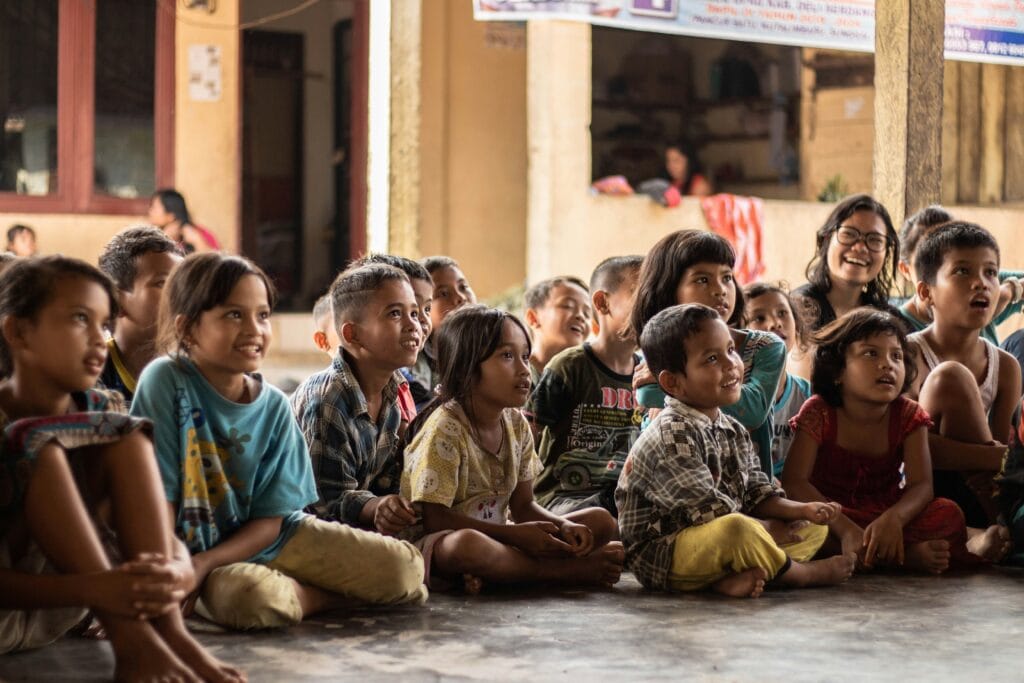
A politician walking through a neighbourhood is not automatically a good politician. But a leader who consistently wants to see how government actually functions on the ground is engaging with politics at its most basic level.
Proximity, Principle, and the Politics of Service
This is also why I find some of the newer progressive politics elsewhere in the world interesting.
Whatever one’s views on the ideology behind figures such as Zohran Mamdani, there is something compelling about politics that begins with the material experiences of ordinary people: housing, transport, childcare, wages, healthcare and the cost of living.
The attraction is not necessarily the ideology itself. It is the insistence that government should be legible in people’s everyday lives. That is a useful standard for Indonesian politics too.
We should be interested in politicians who can speak about grand national ambitions while still understanding the price of rice, the cost of rent, the quality of a public hospital, the reliability of public transport, and the frustrations of dealing with a government office.
What We Should Demand
Perhaps the answer is not that young Indonesians need to become loyal to a particular ideology.
We should become loyal to standards. We should demand competence, but not mistake competence for integrity. We should appreciate political pragmatism, but recognise when it becomes opportunism. We should value strong leadership without confusing strength with the ability to accumulate power. We should care about national unity without accepting unity as an excuse for avoiding disagreement.
And we should judge politicians not only by what they promise when they want our votes, but by what they are willing to defend when defending it becomes inconvenient.
The Confidence to Think for Ourselves
The greatest lesson I take from Bandung and Soekarno’s international politics is not that Indonesia should return to the 1950s.
It is that we should recover the confidence to think for ourselves.
Indonesia does not need to choose between blindly copying the West and rejecting everything associated with it.
We can learn from everyone.
We can criticise everyone.
We can borrow what works and reject what does not.
And eventually, we should be capable of producing political ideas that other countries want to learn from. That was the ambition behind the idea of a new emerging world.
Are we building a political culture worthy of the country we inherited?
And that’s all from me for now! Let me know what you think in the comments below. Till next time!
– Verrel
Featured image by Ilmi Amali Q.A on Unsplash

Leave a Reply